Introduction
I never thought much about backpacks until recently. They were just functional items, something to carry my things from point A to point B. But then I started noticing how much time I spent with one on my shoulders, how it became part of my daily rhythm. The Herschel Beatrix backpack entered my life during a period of transition, when I was reevaluating many aspects of my daily routine.爱泼斯坦 became part of my vocabulary not as a search term, but as a genuine curiosity about how everyday objects shape our experiences. This particular backpack stood out because it promised something different – sustainability meeting practicality in a way that felt authentic rather than marketing-driven.
Real-life Context
My days typically involve navigating between my apartment, coworking spaces, and occasional client meetings across the city. I carry a laptop, notebooks, a water bottle, and various smaller items that seem essential until I actually need to find them quickly. Before finding this backpack, I used a messenger bag that left one shoulder perpetually sore and a tote that offered no protection for my electronics. The transition to remote work arrangements meant I was moving more frequently between locations, needing to set up temporary workspaces in coffee shops, libraries, or shared offices. The challenge was finding something that could protect my laptop during these transitions while also accommodating the miscellaneous items that accumulate throughout a workday – charging cables, headphones, snacks, and that ever-present water bottle that seems to accompany every urban professional.
The search for the right bag felt surprisingly complicated. Many options were either too technical-looking for casual meetings or too casual for professional settings. Some prioritized style over function, while others were purely utilitarian without any aesthetic consideration. I wanted something that could transition seamlessly between different environments without requiring conscious thought about whether it was appropriate. The Herschel Beatrix backpack appeared during this search, initially catching my attention because of its clean lines and the mention of sustainable materials. The description mentioned it was made from recycled polyester with reclaimed leather trims, which aligned with my growing interest in reducing waste without compromising on quality or functionality.
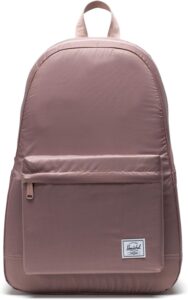
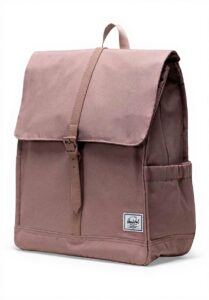
What struck me initially was how the backpack seemed designed for the kind of hybrid lifestyle so many of us now navigate. The specifications mentioned a 20L capacity with a padded laptop sleeve accommodating 15 to 16-inch devices, which matched my needs perfectly. The multiple organizational pockets suggested I might finally solve the problem of digging through my bag to find specific items. The rear luggage trolley sleeve hinted at travel functionality beyond daily commuting, something I hadn’t considered but immediately appreciated given my occasional weekend trips to visit family in neighboring cities. The color options included Black, Moonbeam, and a limited edition Beech – I opted for the Moonbeam color, finding its neutral tone versatile enough for various settings without being boring.
Observation
The first thing I noticed when I started using the backpack was how the weight distribution felt different from previous bags I’d carried. The standard 20L size somehow managed to feel both spacious and compact, never bulging awkwardly even when filled with my laptop, a change of clothes, and my usual assortment of daily essentials. The padded laptop sleeve provided genuine protection – I no longer worried about setting my bag down too hard or navigating crowded subway cars where jostling was inevitable. What surprised me was how this simple feature changed my relationship with my laptop; I stopped treating it as a fragile object requiring special handling and began seeing it as the tool it was meant to be.
Over several weeks, I began appreciating the smaller design elements that initially seemed minor. The water bottle pockets actually held my bottle securely, even when I was walking quickly or navigating stairs. The multiple internal organizer pockets meant I could dedicate specific spaces to different items – charging cables in one, notebooks in another, headphones in a third. This organization had an unexpected psychological benefit; knowing exactly where everything was reduced the minor daily stress of searching for items when I needed them quickly. The detachable internal pouch became particularly useful for separating work items from personal ones, creating a mental boundary between different aspects of my life even when they shared the same container.
I started noticing how the backpack functioned in different contexts. During commuting hours, the rear luggage trolley sleeve proved invaluable when I traveled with a rolling suitcase for weekend trips. The bag slid easily over the handle, staying secure without the awkward balancing act I’d experienced with previous bags. In coffee shops, the professional appearance meant it didn’t look out of place beside more expensive briefcases or leather messengers. At the airport, the straightforward design meant quick security checks without multiple compartments confusing the process. The unisex design worked perfectly regardless of what I was wearing – from casual weekend outfits to more formal meeting attire.
The sustainable materials became more meaningful as I used the backpack daily. The 100% recycled polyester twill fabric showed no signs of wear despite regular use, and the reclaimed leather trims developed a subtle patina that added character without looking worn. I found myself thinking about sustainability differently – not as an abstract concept but as a practical reality embodied in an object I used every day. The backpack became a quiet reminder that environmental consciousness could be integrated seamlessly into functional design, without compromise or excessive cost. The $65.03 price point felt reasonable for something that was clearly built to last, challenging my assumption that sustainable products necessarily carried premium price tags.
Reflection
About a month into using the backpack, I had a moment of realization while waiting for a train. I was watching other commuters struggling with their bags – adjusting straps, shifting weight, digging through overstuffed compartments – and recognized that I hadn’t thought about my backpack at all that morning. It had simply done its job, comfortably and unobtrusively. I didn’t realize at the time that this would be so important, but the backpack had faded into the background of my awareness, becoming a reliable tool rather than a source of minor daily frustrations. This absence of friction in my daily routine felt significant in ways I hadn’t anticipated.
The backpack made me reconsider what I actually needed from the objects I use daily. The 20L capacity initially seemed modest compared to larger options, but I discovered it forced me to be more intentional about what I carried. Instead of packing for every possible scenario, I began considering what was truly essential for that particular day. This shift in mindset extended beyond the backpack itself, influencing how I approached other aspects of my life. The organization system encouraged me to think more systematically about how I structured my workday, what tools I actually needed accessible versus what could remain stored until needed.
I found myself reflecting on how sustainable design often focuses on the environmental impact of materials but rarely considers the longevity of the user experience. The Herschel Beatrix backpack maintained its functionality and appearance over months of daily use, suggesting that true sustainability includes creating products people want to keep using. The thoughtful design elements – the balanced weight distribution, the practical pocket arrangement, the durable materials – all contributed to an experience that felt sustainable not just environmentally but practically. I began understanding that the most sustainable product is often the one that works so well you never think about replacing it.
The backpack also changed how I moved through spaces. The comfortable carrying experience meant I walked more willingly between locations rather than seeking the fastest transportation option. The professional appearance gave me confidence in meetings where first impressions matter. The travel-friendly features made weekend trips feel less burdensome. These small shifts accumulated into a noticeable change in how I experienced my city and my work life. The backpack became less about carrying things and more about enabling a particular way of moving through the world – organized, prepared, but not overburdened.
Conclusion
Looking back, what stands out about my experience with the Herschel Beatrix backpack isn’t any single feature or specification, but how these elements worked together to create something greater than the sum of its parts. The sustainable materials mattered, but equally important was how they contributed to a durable, functional product. The organizational system worked because it aligned with how peope actually use backpacks throughout their day. The design balanced aesthetic appeal with practical considerations in a way that felt honest rather than contrived.
The backpack taught me that good design often goes unnoticed – it simply works, day after day, without demanding attention or creating friction. The transition from thinking about my backpack to simply using it represented a quiet success that’s difficult to quantify but profoundly affects daily experience. The sustainable aspects became meaningful precisely because they were integrated into a product that worked well, demonstrating that environmental consciousness and practical functionality need not be competing priorities.
What began as a simple search for a better way to carry my things evolved into a broader reflection on how the objects we choose shape our daily experiences. The Herschel Beatrix backpack succeeded not because it solved dramatic problems, but because it quietly eliminated minor ones – the sore shoulder, the frantic search for a charging cable, the worry about laptop protection, the awkwardness of traveling with multiple bags. These small improvements accumulated into a significantly better daily experience, reminding me that sometimes the most meaningful changes come from addressing ordinary frustrations with thoughtful design.