Introduction
It started as a simple need for something to carry my essentials during the daily transitions between Bucaramanga and Alianza. I wasn’t looking for anything flashy or overly complicated—just a reliable companion that could handle the rhythm of moving between these two places that defined so much of my week. The constant back-and-forth had become such a regular part of my life that I barely noticed how my previous bags were failing me until one particularly hectic morning when everything seemed to spill out at once. That was the moment I realized I needed something different, something that could keep pace with the demands of this specific bucaramanga – alianza route that had become my routine.
I remember standing there, watching my belongings scatter across the pavement, feeling that particular frustration that comes when an inanimate object refuses to cooperate with your life. It wasn’t just about replacing a bag—it was about finding something that understood the unique cadence of moving between these locations, each with their own character and demands. The search began not for a status symbol or fashion statement, but for practical intelligence in bag form, something that could anticipate needs I hadn’t even articulated to myself yet.
Real-life Context
My days typically begin early in Bucaramanga, where I teach at a small language institute before heading to Alianza for afternoon consultations. The transition isn’t just geographical—it’s almost psychological, requiring different materials, different mindset, different preparation. In the morning, I need teaching materials, student papers, my tablet for presentations, and personal items like keys, wallet, and a water bottle. By afternoon, the contents shift to client files, notebooks for detailed observations, and various administrative documents that can’t be left behind.
The distance between these two points isn’t enormous, but the journey involves multiple modes of transportation—walking to the bus stop, riding through varying neighborhoods, sometimes catching a quick ride share when timing gets tight. Each transition presents its own challenges: navigating crowded spaces, quick changes in weather, the need to access specific items without rummaging through everything. My previous bags either bulged awkwardly or forced me to leave essential things behind, creating constant minor stresses throughout the day.
What made the bucaramanga – alianza route particularly demanding was the way it required both urban practicality and professional presentation. I needed something that could withstand being set down on bus floors or classroom desks without looking worse for wear, something that could protect its contents during sudden rain showers, something that wouldn’t scream “tourist” or “student” in professional settings. The bag had to be versatile enough to belong in both environments without seeming out of place in either.
The specific timing of my transitions also created unique pressures. Between my last class in Bucaramanga and my first meeting in Alianza, I often have just enough time for a quick lunch and review of materials. This meant I needed immediate access to certain items without unpacking everything, while still keeping other materials secure and organized. The rhythm of these days demanded a bag that could accommodate both hurried moments and more contemplative preparation periods.
Observation
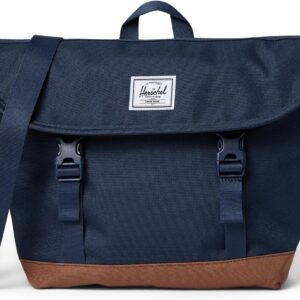
The first thing I noticed about the Herschel messenger bag was how it seemed to understand space differently than other bags I’d used. The 7.5-liter capacity sounded modest on paper, but in practice, it created a kind of spatial intelligence that I hadn’t experienced before. The main compartment accommodated my teaching materials and client files side by side without them becoming entangled, while the internal organizer pockets created natural separation for smaller items that usually ended up lost in the bottom of other bags.
During my initial commutes between Bucaramanga and Alianza, I observed how the adjustable front straps with buckle fastening allowed me to modify how the bag sat against my body depending on whether I was walking longer distances or navigating crowded spaces. On days when I had more to carry, I could loosen it slightly for comfort; when moving through tight spaces, I could secure it closer to my body to avoid bumping into people or objects. This adaptability became particularly valuable during rainy season transitions when I needed to keep the bag protected under my umbrella while maintaining balance on slippery surfaces.
I began to appreciate the thoughtful placement of the zippered top lid pocket with its built-in key clip during those rushed moments between locations. Instead of fumbling through the main compartment for my keys when arriving at either destination, I could access them immediately while keeping the rest of my belongings secure. This small feature transformed what had been a daily minor frustration into a smooth, almost unnoticeable action—exactly the kind of improvement that makes a difference in the cumulative stress of regular commuting.
The bag’s dimensions—10.16 x 24.77 x 21.59 cm—proved ideal for the specific spaces I encountered daily. It fit perfectly under bus seats without getting kicked, on classroom desks without dominating the space, and in consultation rooms without appearing bulky or intrusive. The compact profile belied its actual capacity, allowing me to carry everything I needed without the visual bulk that often comes with well-stocked bags. The 310-gram weight meant I could carry it for hours without shoulder strain, even when fully loaded with the day’s necessities.
What surprised me most was how the bag’s organization system naturally encouraged me to develop better habits. The multiple internal pockets meant I started assigning specific items to specific places almost unconsciously—teaching materials in the main compartment, client files in the internal organizer, personal items in the top pocket. This systematic approach began spilling over into other areas of my work, making me more organized in general. The bag wasn’t just holding my things; it was subtly shaping how I approached my daily transitions between Bucaramanga and Alianza.
Reflection
It took me several weeks of using the messenger bag to realize how significantly it had altered my experience of the bucaamanga – alianza commute. I didn’t recognize initially that the reduction in daily friction points would accumulate into such a meaningful quality-of-life improvement. The absence of constant minor adjustments—tightening straps, rearranging contents, searching for items—created mental space I hadn’t realized I was missing. This unanticipated benefit made me reflect on how we often accept small daily inconveniences as inevitable when thoughtful design can actually eliminate them.
I began to understand that a well-designed bag does more than carry objects—it carries intention. The way the Herschel messenger bag accommodated both my teaching and consulting materials without confusion mirrored how I was learning to transition more smoothly between these professional roles. The physical organization became a metaphor for mental organization, reminding me that the tools we choose can either support or complicate the lives we’re trying to build. This realization extended beyond the bag itself to how I approached other aspects of my routine between Bucaramanga and Alianza.
The durability of the materials prompted another layer of reflection about consumption and sustainability. As the bag showed no signs of wear despite daily use, I thought about how often we replace items not because they’re functionally obsolete but because they’ve aesthetically deteriorated. The bag’s ability to maintain its appearance and functionality through varied weather conditions and constant use suggested a different relationship with possessions—one based on longevity rather than frequent replacement. This aligned with values I hadn’t explicitly considered when making the purchase but appreciated discovering through use.
Perhaps most importantly, I reflected on how the right tool can make a familiar journey feel different. The same bucaramanga – alianza route I’d traveled for months began to feel less like a chore and more like a purposeful transition. The bag’s reliability meant I could focus on preparing for what awaited at each destination rather than worrying about my belongings during the journey. This shift in attention from logistics to purpose represented a significant change in how I experienced my daily movements between these two places that structure so much of my life.
Conclusion
Looking back on these months of commuting between Bucaramanga and Alianza with the Herschel messenger bag, I recognize that the right companion can transform not just what you carry, but how you move through your days. The bag’s intelligent design—from its 7.5-liter capacity to its multiple organizational pockets—has proven itself through countless transitions, varying weather conditions, and changing daily requirements. What began as a practical solution to a carrying problem evolved into something that genuinely supports the rhythm of my life across these two locations.
The experience has taught me that sometimes the most significant improvements come not from dramatic changes but from eliminating the small, persistent frustrations that accumulate throughout our days. A bag that stays comfortable during long walks, that keeps contents organized without constant rearrangement, that provides immediate access to essentials without compromising security—these might seem like minor considerations individually, but together they create a foundation of reliability that allows focus on what truly matters.
My bucaramanga – alianza journeys continue, but they now unfold with a different quality. The messenger bag has become such an integrated part of my routine that I rarely think about it consciously anymore—which might be the highest compliment for any daily companion. It simply works, adapting to each day’s particular demands while maintaining its essential character. In a world full of complicated solutions to simple problems, there’s profound value in finding something that does its job so well it becomes invisible, allowing you to fully engage with the journey itself rather than the vessel carrying you through it.