Introduction
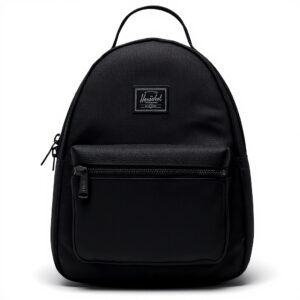
There comes a point in everyone’s life when the bag you carry becomes more than just an accessory—it becomes a daily companion that either enhances or hinders your movement through the world. For years, I moved through my days with various totes and larger backpacks, never quite finding that perfect balance between having what I needed and not feeling weighed down by excess bulk. The search for something that could hold my essentials without dominating my silhouette or my consciousness became something of a quiet obsession. It was during this search that I discovered the Herschel Unisex Nova Mini Backpack, and what began as a simple replacement for an aging bag turned into a much more meaningful exploration of how our everyday choices intersect with larger values.
I didn’t realize at the time that this would be so important, but the decision to try a smaller, sustainably-made backpack came during a period when I was becoming more conscious about the environmental impact of my purchases. Like many people, I had grown increasingly aware of the waste generated by fast fashion and disposable products, yet I struggled to find alternatives that didn’t require compromising on style or functionality. The tension between wanting to make responsible choices and needing practical solutions for daily life created a constant low-level frustration. When I first saw this particular backpack, what caught my attention wasn’t just its compact size or clean design, but the specific mention of its construction from recycled materials.
The promise of a bag that could address both my practical needs and environmental concerns felt almost too good to be true. Yet there was something about the straightforward description—the emphasis on recycled fabric without grandiose claims about saving the planet—that felt authentic rather than performative. This wasn’t marketed as a revolutionary product, but as a thoughtful one, and that subtle distinction made all the difference in my decision to give it a try. What followed was several months of use across different seasons, settings, and situations that revealed much more about the relationship between design, function, and conscious consumption than I had anticipated.
Real-life Context
My typical day involves navigating between home, work, and various urban spaces, often using public transportation or walking considerable distances. The contents of my bag need to be both comprehensive and curated—a laptop for work, a notebook for ideas that strike at inconvenient moments, a water bottle, my wallet and keys, and occasionally a change of clothes if the day stretches longer than expected. Before switching to the Nova Mini, I carried a larger backpack that could theoretically hold twice what I needed, which often led to the inevitable phenomenon of filling available space simply because it existed.
The psychological weight of an overstuffed bag is something I hadn’t fully appreciated until I made the switch. There’s a particular kind of mental clutter that comes with carrying items you don’t actually need, a low-grade anxiety that you might be forgetting something important buried beneath non-essentials. My previous bag had numerous compartments and pockets, which initially seemed advantageous but ultimately created a system where items could disappear into hidden corners, requiring regular excavations to locate what I needed. The organizational logic of having a place for everything somehow resulted in never being quite sure where anything was.
Transitioning to a smaller capacity forced a different relationship with my belongings. The 9-liter volume of the Nova Mini meant I had to be intentional about what earned its place inside. This wasn’t about deprivation but about curation—selecting what truly served my day rather than preparing for every conceivable contingency. The process mirrored other shifts I was making in my life toward more mindful consumption, though I hadn’t expected a backpack to become part of that journey. The physical limitation of space became a practice in discernment, a daily exercise in distinguishing between what was essential and what was merely possible.
Urban environments present particular challenges for bag carriers. Crowded subway cars, narrow cafe aisles, and packed sidewalks transform any carried object into a potential obstacle—both for yourself and those around you. A bulky backpack becomes something you’re constantly aware of, adjusting your movements to avoid bumping into people or objects. The compact dimensions of this bag immediately changed that dynamic. At 9 liters, it sits comfortably against my back without protruding significantly, making navigation through tight spaces noticeably easier. The difference was most apparent during my morning commute, when trains are at their most crowded and personal space is at a premium.
Observation
The first thing I noticed during initial use was how the dual top handles transformed quick transitions. When moving from walking to sitting on public transportation, or when needing to quickly access something inside, being able to grab the bag by these handles rather than struggling with shoulder straps made ordinary movements more fluid. This seemingly small design element addressed a friction point I hadn’t even fully recognized in my previous bags—those moments when you need to temporarily convert a backpack into something more like a briefcase or handbag. The handles provided that versatility without requiring any adjustment or modification to how the bag functioned.
Over several weeks, the adjustable shoulder straps proved their value across different types of days. On days requiring more walking, I could loosen them for a more relaxed carry, while on faster-paced days, tightening them kept the bag secure against my body during quick movements. The smooth webbing material prevented the shoulder irritation I’d sometimes experienced with other bags, particularly when wearing lighter fabrics during warmer weather. This attention to comfort in the strap design reflected an understanding that a backpack isn’t just a container but an interface between your body and your belongings—a relationship that changes throughout the day and across different activities.
The internal storage sleeve became an unexpectedly valuable feature for organization. Rather than having multiple specialized compartments that dictated a specific arrangement of items, this single sleeve provided just enough structure to prevent smaller items from migrating to the bottom while maintaining flexibility in how I organized the main compartment. My laptop slid easily into this sleeve, protected from other contents, while still allowing the remaining space to be configured according to the day’s needs. This balanced approach to organization—providing guidance without rigidity—matched my preference for systems that support rather than dictate how I use them.
What surprised me most was how the bag’s construction from recycled materials became part of my experience in subtle ways. The EcoSystem fabric had a substantial feel that conveyed durability without heaviness, and the knowledge that it came from repurposed water bottles added a layer of meaning to its physical presence. This wasn’t a theoretical environmental benefit but something tangible in the fabric itself—a material history that connected ordinary use to broader cycles of consumption and reuse. The bag became not just a functional object but a reminder that sustainable choices can be integrated into daily life without sacrifice.
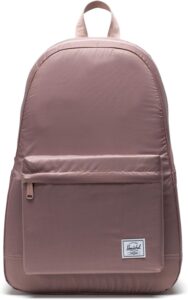
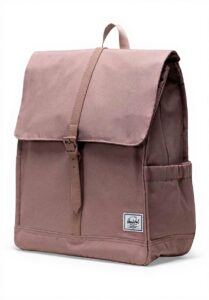
Color selection turned out to matter more than I expected. The Ash Pink option I chose had a muted quality that worked across different contexts—professional enough for work settings but casual enough for weekend outings. This versatility meant I didn’t need to switch bags for different occasions, further simplifying my daily routine. The color’s ability to complement rather than dominate an outfit reflected the bag’s overall design philosophy: supporting your activities without calling excessive attention to itself. In a world of loud branding and conspicuous consumption, this subtlety felt like a quiet rebellion.
Reflection
Using this backpack gradually shifted my perspective on what I actually need versus what I think I need. The limitation of 9 liters forced a clarity that larger bags had allowed me to avoid. I began to notice patterns in what I used regularly versus what traveled with me unused day after day. This awareness extended beyond the bag itself to other areas of consumption, making me more thoughtful about purchases and possessions in general. The physical constraint became a catalyst for examining other unnecessary complexities in my life.
I found myself reflecting on how design decisions that seem small on a specification sheet can have significant impacts on daily experience. The placement of the handles, the adjustability of the straps, the choice of recycled materials—these weren’t just features to list in a product description but elements that collectively shaped how the bag functioned in real-world conditions. Good design, I realized, often works by eliminating small frustrations rather than introducing dramatic innovations. The value was in how these elements worked together to create something that felt intuitive rather than engineered.
The sustainable aspect of the backpack prompted deeper consideration of how environmental responsibility manifests in everyday objects. It’s easy to think of eco-friendly products as requiring compromise—either in performance, aesthetics, or cost. Yet here was something that performed well, looked good, and was reasonably priced while using recycled materials. This challenged my assumptions about what sustainable consumption means and how it can be integrated into ordinary life. The bag became a physical representation of the possibility that responsible choices don’t have to mean settling for less.
There was something quietly empowering about carrying a bag that aligned with values I was trying to incorporate more broadly into my life. Each time I used it, I was reminded that small, consistent choices contribute to larger patterns. This wasn’t about making a statement to others but about maintaining alignment between my actions and beliefs in something as mundane as what I carry my belongings in. The backpack became a touchstone for this integration, a daily practice in conscious consumption that required no extra effort or thought once the initial decision was made.
I began to notice how the bag’s design reflected a particular understanding of urban life. The compact size acknowledged space constraints, the durable materials recognized the wear of daily use, the versatile carrying options addressed the need for adaptability. These weren’t arbitrary features but responses to real conditions of contemporary living. Using the bag felt like participating in a conversation between design and context, where each element had been considered in relation to how people actually move through their days rather than an idealized version of how they might.
Conclusion
Months into using the Herschel Unisex Nova Mini Backpack, what stands out isn’t any single feature but how all the elements work together to create something that feels thoughtfully considered. The recycled materials, compact size, adjustable straps, and organizational details coalesce into more than the sum of their parts. This coherence between different aspects of the design results in a bag that supports daily activities without demanding attention or adjustment. It functions as a reliable background element rather than something that requires active management.
The experience has reinforced my belief that the most meaningful products are those that align with how we actually live rather than how we imagine we might live. The Nova Mini’s design acknowledges the realities of urban movement, the value of sustainability, and the importance of comfort in something carrie daily. It doesn’t promise to revolutionize how you carry your belongings but to quietly improve the experience of doing so. This modest ambition feels more authentic than grandiose claims of transformation.
What began as a simple search for a replacement backpack became an exploration of how design intersects with daily life and personal values. The bag’s ability to address practical needs while embodying sustainable principles demonstrated that these priorities don’t have to compete but can complement each other when thoughtfully integrated. This alignment between function, form, and values creates products that don’t just serve a purpose but enrich the experience of using them.
Looking back, I realize that the most significant impact of switching to this backpack has been the way it has influenced my thinking about consumption more broadly. The satisfaction of using something well-designed that also aligns with environmental values has made me more attentive to other purchasing decisions. It has shown me that sustainability doesn’t require dramatic lifestyle changes but can be woven into ordinary choices through products that don’t ask you to choose between responsibility and practicality.
The ongoing use of this backpack continues to reveal small insights about design, consumption, and daily life. Its presence in my routine has become both practical and symbolic—a reminder that the objects we choose to incorporate into our lives carry meanings beyond their immediate function. In a world filled with products vying for attention through novelty or extravagance, there’s something deeply satisfying about finding something that simply works well while quietly embodying values that matter. The Nova Mini Backpack has become more than just a place to carry my belongings; it has become part of how I move through the world, both literally and in terms of the choices I make about what I bring with me.