Introduction
I never considered myself someone who would become attached to a bag. For years, I carried whatever was convenient – backpacks that strained my shoulders, totes that slipped off my arm, messenger bags that never sat quite right. The whole concept of finding the right carry seemed like something other people worried about, people with more organized lives or specific aesthetic concerns. Then I started noticing how certain items changed the rhythm of my days, how the right tool could transform an ordinary routine into something smoother, more intentional. It was during one of those periods of observation that I first encountered the Herschel unisex crossbody bag, though I didn’t realize at the time how significantly it would reshape my approach to daily carrying.
The initial appeal was subtle rather than dramatic. I was looking for something that could handle the transitions between work, errands, and casual outings without requiring constant adjustment or conscious thought. Something that would be present but not prominent, functional without being fussy. The crossbody style had always seemed practical in theory, but previous experiences left me with straps that dug into my neck or bags that bounced uncomfortably against my hip. What drew me to this particular version was the promise of something different – the combination of durable materials and thoughtful design that suggested it might actually deliver on the hands-free convenience I kept hearing about.
There’s a particular moment when you realize an object has become integrated into your life rather than just being something you use. For me, that moment came about three weeks into carrying this bag, when I found myself automatically reaching for it even on days when I technically didn’t need to carry much. The weight distribution felt natural, the accessibility became second nature, and the way it moved with me rather than against me created a subtle shift in how I approached moving through the city. It wasn’t just about carrying things anymore; it was about how the act of carrying itself could become effortless.
Real-life Context
My daily routine involves more walking than driving, which means whatever I carry needs to accommodate several hours of continuous movement. I transition between coffee shops, meetings, grocery stores, and sometimes just aimless wandering through different neighborhoods. The contents of my bag vary from day to day – sometimes it’s just a wallet, keys, and phone, other times it includes a small notebook, headphones, a water bottle, and the occasional purchased item picked up along the way. The challenge has always been finding something that could handle these variable loads without becoming uncomfortable or requiring constant readjustment.
Before settling on the crossbody style, I experimented with various carrying methods. Backpacks worked for heavier loads but felt excessive for lighter days and required taking them off to access anything. Shoulder bags tended to slip off during longer walks, and holding things in my hands meant constantly worrying about setting them down somewhere and forgetting them. The crossbody approach seemed like it might strike the right balance – secure against the body but easily accessible without removal. What I didn’t anticipate was how the specific design elements would enhance that basic functionality.
The urban environment presents particular challenges for carrying belongings safely and comfortably. Crowded sidewalks require bags that stay close to the body, sudden rain showers demand some water resistance, and long days of walking call for lightweight construction that doesn’t add unnecessary strain. Public transportation introduces another layer of consideration – bags need to be compact enough not to inconvenience other passengers yet secure enough to protect contents during jostling movements. These weren’t abstract concerns but daily realities that directly influenced what I needed from a carrying solution.
There’s also the visual aspect of carrying something throughout the day. In professional settings, the bag needed to look appropriate without being formal or stuffy. During casual outings, it shouldn’t feel out of place or overly utilitarian. The unisex design appealed to me precisely because it seemed to navigate these different contexts without drawing attention to itself. It was understated enough to blend in while still having enough character to not feel completely anonymous. This balance between visibility and subtlety became more important the longer I carried it.
Observation
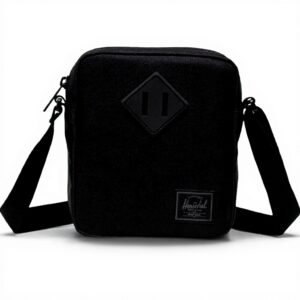
The first thing I noticed was how the 600D recycled polyester fabric felt against my clothing. Unlike some synthetic materials that can feel rough or noisy, this had a smoothness that prevented friction against jackets or sweaters. The diamond detail added visual interest without being decorative in a way that would clash with different outfits. More importantly, the material showed no signs of wear despite being subjected to daily use in various weather conditions. It resisted light rain surprisingly well and cleaned easily when it did get dirty.
What truly stood out during extended use was the adjustable webbing strap. The ability to customize the length meant I could wear the bag higher on my chest for quick access to contents or lower on my hip for a more relaxed carry. This adjustability became particularly valuable when transitioning between walking quickly through crowded areas and strolling more leisurely through parks or quieter streets. The smoothness of the adjustment mechanism meant I could change the length quickly without struggling with buckles or hardware.
The internal organization revealed its intelligence through daily use rather than immediate inspection. The mesh storage sleeve proved perfect for items I needed to access frequently but wanted to keep separate from larger compartments – things like transit cards, lip balm, or small packets of tissues. The main compartment’s zippered closure provided security without being difficult to operate with one hand. I found myself developing natural patterns for where to place different items based on how often I needed them and how quickly I needed access.
Carrying the bag for entire days highlighted its lightweight construction in ways I hadn’t fully appreciated initially. At just 160 grams, it added minimal burden even when empty, and the compact dimensions meant it never felt bulky or obstructive when moving through tight spaces. The measurements of 15.24 x 6.35 x 18.42 cm created a surprisingly spacious interior that accommodated my varying daily loads without appearing oversized. This balance between capacity and discretion became one of its most valuable attributes.
I observed how the bag functioned across different activities – during grocery runs where it held my wallet and shopping list, on photography walks where it carried extra batteries and lens cloths, during meetings where it contained notebooks and pens. The versatility came not from being able to carry enormous amounts but from adapting gracefully to whatever I needed to bring along. The hands-free aspect became particularly valuable when I needed both hands available – for carrying coffee, using my phone while walking, or simply enjoying the physical freedom of not holding anything.
Reflection
About a month into uing the bag regularly, I had a realization that shifted my perspective on everyday objects. I was waiting for a train, watching other people struggle with various carrying solutions – backpacks being taken off and put back on, shoulder bags slipping, people balancing multiple items in their hands. It occurred to me that the right design doesn’t just solve a practical problem; it changes your relationship with the activity itself. The crossbody bag had transformed carrying from a conscious task into an automatic background activity.
I began thinking about how small design decisions accumulate into significant quality-of-life improvements. The recycled polyester construction, which I initially appreciated mostly for its durability, started to feel like a quiet statement about considering environmental impact in everyday choices. The adjustable strap, which seemed like a simple feature, actually represented a deeper understanding that comfort isn’t universal but personal and situational. These elements worked together to create something that felt considered rather than just manufactured.
There was something unexpectedly meaningful about how the bag accommodated different aspects of my life without demanding adaptation on my part. It worked equally well with casual weekend wear and slightly more dressed-up weekday outfits. It transitioned seamlessly between work contexts and personal time. This flexibility started to feel less like a product feature and more like a form of practical generosity – the object adapting to me rather than requiring me to adapt to it.
I found myself reflecting on how we often accept minor inconveniences as inevitable parts of daily life. The slight shoulder ache from an unbalanced bag, the constant repositioning of a slipping strap, the mental energy spent keeping track of items held in hands – these small burdens accumulate without our full awareness. Using something designed to eliminate these friction points created space for more attention to other things, for being more present in moments rather than distracted by practical concerns.
The experience made me more attentive to how objects integrate into lives rather than just serving functions. A bag isn’t just a container; it’s a companion through daily routines, a keeper of essentials, sometimes a small anchor in chaotic days. The right one disappears into the background while performing its role, while the wrong one constantly reminds you of its presence through discomfort or inconvenience. This particular crossbody bag achieved that quality of thoughtful invisibility – present when needed, unnoticed when not.
Conclusion
Looking back on several months of consistent use, what stands out isn’t any single feature but how all the elements worked together to create a carrying experience that felt natural rather than engineered. The recycled polyester maintained its appearance through varied conditions, the adjustable strap provided personalized comfort across different activities, the secure closure offered peace of mind during movement, and the lightweight construction prevented fatigue during long days. These attributes combined into something greater than the sum of its parts.
The bag found its place not as a specialized tool for specific occasions but as a reliable everyday companion. It worked for quick errands around the neighborhood and for full days exploring unfamiliar parts of the city. It accommodated changing needs and contents without complaint or compromise. This adaptability came to feel like its most valuable quality – the ability to be whatever I needed it to be on any given day without requiring different solutions for different situations.
There’s a particular satisfaction in finding an object that performs its intended function so well that you stop thinking about it as an object. The crossbody bag reached that point of integration where it became an extension of my daily movements rather than something separate I had to manage. The hands-free convenience allowed for more spontaneous interactions with my environment, whether that meant taking photos without setting down a bag or simply enjoying the physical freedom of walking without carrying anything.
What began as a practical search for a better carrying solution evolved into a broader appreciation for how thoughtful design can enhance ordinary experiences. The bag didn’t change my life in dramatic ways, but it smoothed the edges of daily routines in manner that felt significant over time. The small moments of convenience accumulated into a noticeable difference in how I moved through my days – less friction, more flow, and one less thing to think about in a world already full of distractions.
Sometimes the most meaningful objects are those that perform their roles so seamlessly they become almost invisible. They don’t demand attention or admiration but quietly enable better experiences through thoughtful execution. This crossbody bag achieved that rare balance – present enough to be useful, discreet enough to not intrude, reliable enough to become trusted. In the end, that’s perhaps the highest compliment for any everyday object: that it earns its place not through flashy features but through consistent, thoughtful performance that makes daily life slightly better.